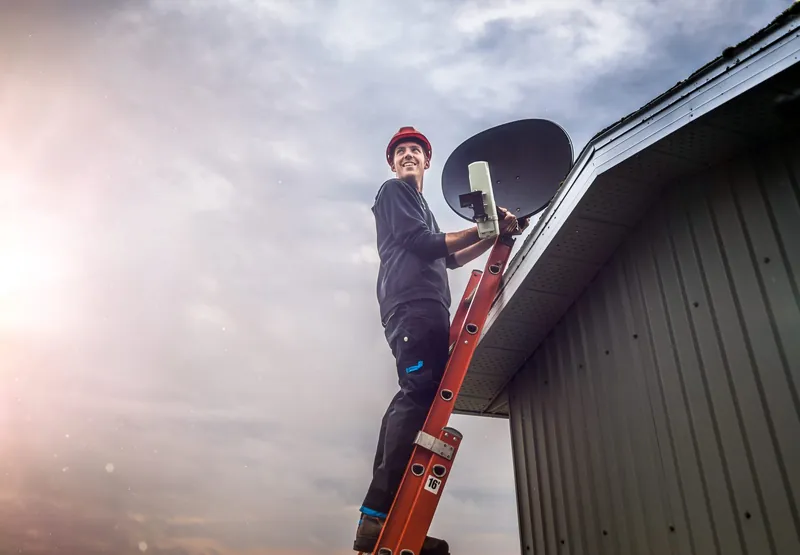
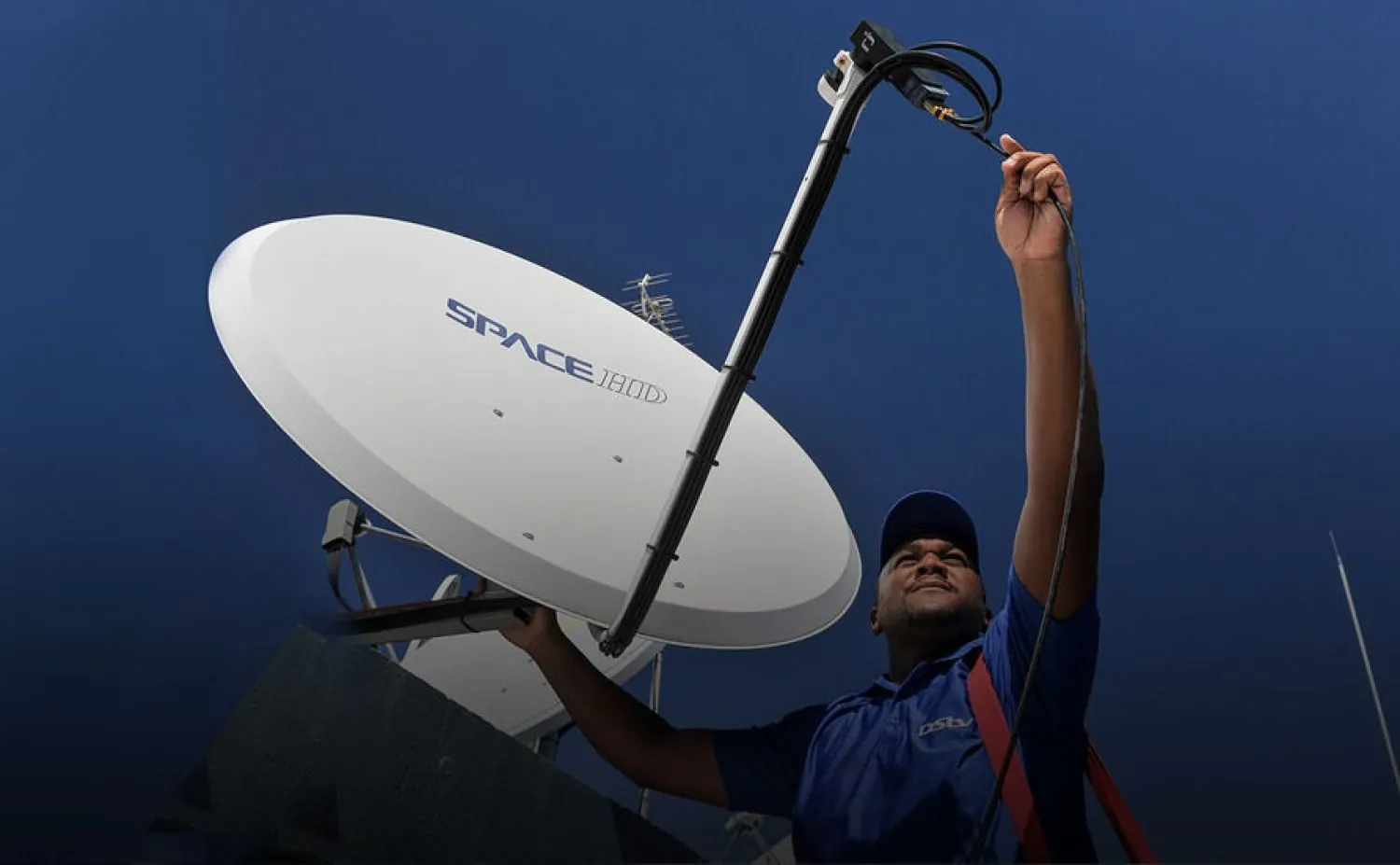
DStv dish alignment problems tend to show up as a picture that breaks into blocks, sound that cuts out, or signal that disappears in weather your dish used to handle. A dish has to point precisely at one satellite, and even a small knock from wind, hail or a ladder can shift it enough to cause trouble. The good news is that realignment is a routine job, provided the dish and mount are still sound.
This article explains why accuracy matters so much, the symptoms to watch for, what typically knocks a dish off target, and how to tell alignment problems from other faults that look similar.
Why a Few Millimetres Matter
DStv in South Africa comes from the Intelsat 20 (IS-20) satellite, positioned at 68.5 degrees East above the equator. From Gauteng, a dish points roughly north-east and is tilted upward towards it. The satellite is tens of thousands of kilometres away, so the signal arriving at your roof is faint.
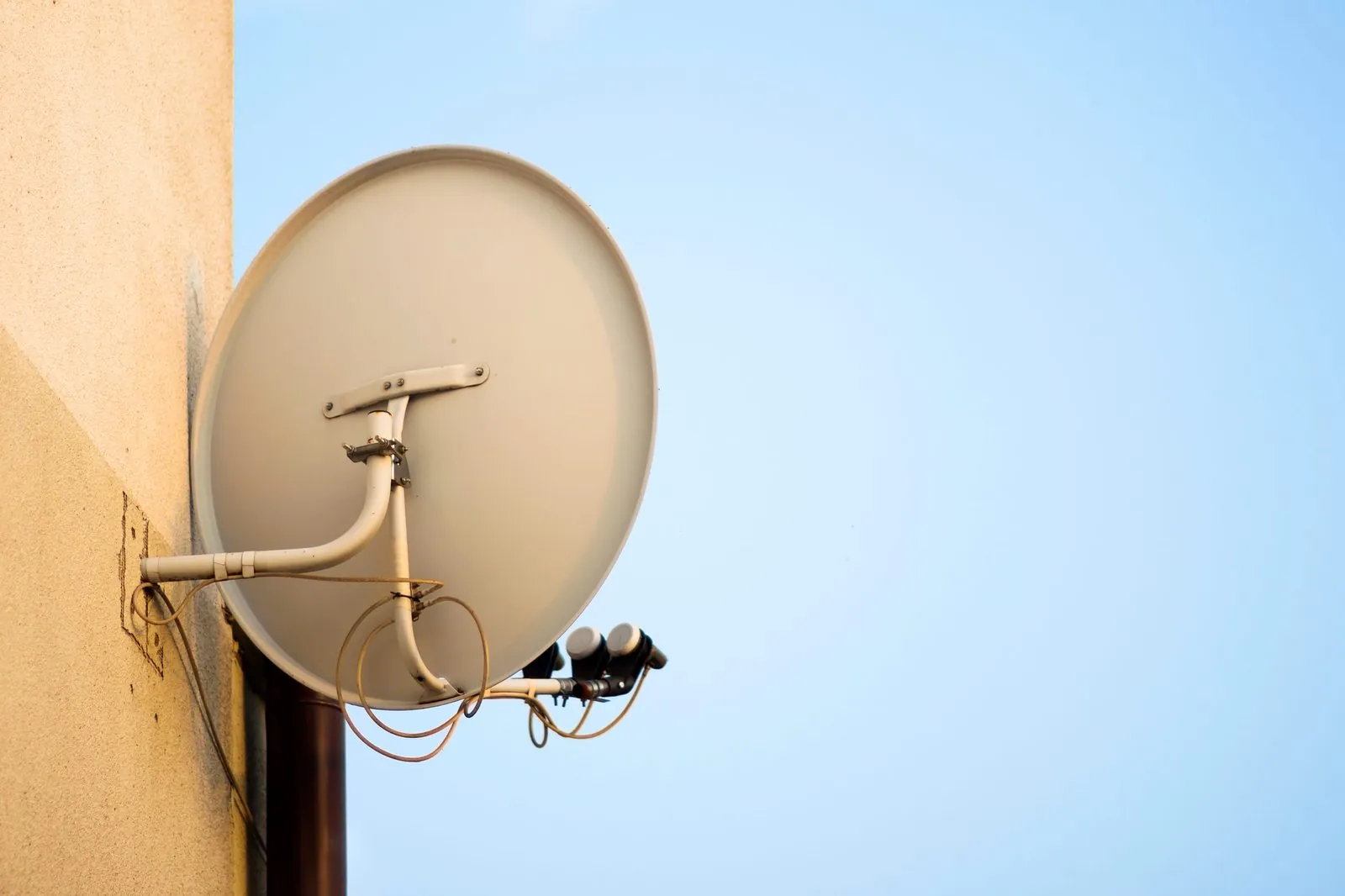
The curved dish collects that faint signal and focuses it onto the LNB at the end of the arm. If the dish turns or tilts even slightly, the focus drifts and the LNB receives less. A movement you might not notice from the garden can be the difference between a solid picture and none at all.
Symptoms of a Dish That Is Out of Line
- Pixelation and freezing. The picture breaks into squares or stalls for a second, then carries on.
- Sound dropping out. Audio cuts in and out, sometimes before the picture is affected.
- Losing signal in light rain. A well-aligned dish rides out most showers. If drizzle now knocks you off air, the signal margin has shrunk.
- Some channels work, others do not. A marginal signal can be enough for some channels and not for others.
- Breaking up when it is windy. This often points to a loose mount that lets the dish sway.
- E48-32 that will not clear. When the dish has moved far enough, the decoder loses the signal completely and shows the no-signal message even in clear weather.
- Every decoder affected at once. Since all of them share the same dish, alignment problems show up on every TV in the home.
What Knocks a Dish Off Target
Wind and storms
Strong gusts push against the dish like a sail. A dish on a solid, tight bracket usually holds, but one with loose bolts or a weak mount can shift a little with each storm until the signal gives up.
Hail
Gauteng hailstorms can dent the reflector or strike the arm and LNB hard enough to move them. A dented dish may need replacing rather than realigning.
Ladders and roof work
Painters, roofers, gutter cleaners and other trades often lean ladders on or near the dish, or brush against it while working. If your dish problems started soon after any work on the house, this is a strong suspect.
A tired or poor mount
Brackets rust, wall plugs loosen in crumbling plaster, and dishes fixed to fascia boards or thin cladding move as the material flexes or rots. Realigning a dish on a failing mount only buys time.
Everyday knocks
A dish mounted low on a wall can be bumped by a ball, a garden tool or someone pruning a tree beside it.
Is It Alignment, or Something Else?
Several faults produce the same symptoms, which is why a technician tests rather than guesses. This comparison shows where they overlap.
| Symptom | Alignment can cause it | Other common causes |
|---|---|---|
| Pixelation in light rain | Yes | Water in a connector, worn cable, an ageing LNB |
| All TVs lose signal together | Yes | Failed LNB or switch, damaged main cable, blocked line of sight |
| Only one TV affected | Unlikely | That decoder's cable, wall point, switch output or the decoder |
| Signal worse in summer than winter | Sometimes | Trees in full leaf blocking the view, more frequent storms |
| Breaks up in wind | Yes, through a loose mount | A loose connector moving with the cable |
Most DStv decoders also have a signal information screen in the settings menu that shows signal strength and quality (menu names differ between models). If you can, note the readings in clear weather and mention them when you call. Please do not use that screen to try to adjust the dish yourself.
Why Realigning a Dish Is Not a DIY Job
Most dishes sit on a roof, a high wall or a pole, so reaching one means working at height, which is how people get hurt. Proper alignment also needs a signal meter: turning a dish by eye or by watching the TV usually ends with it pointed at the wrong satellite or further off than before. Some dishes are also near overhead power lines, which makes any work around them dangerous.
If you suspect your dish has moved, leave it where it is and call 083 489 1322. A technician can check it safely and tell you whether it needs realigning, a new mount or a replacement part.
What Happens During a Professional Realignment
Confirm the cause
The technician checks the cabling, connectors and LNB first, so you are not paying to realign a dish when the real fault is a corroded plug.
Secure the mount
Loose bolts are tightened and rusted or weak brackets are replaced, so the dish stays put after the job.
Peak the signal with a meter
The dish is adjusted in small steps while measuring signal strength and quality, until it is aimed for the best reading available.
Seal and test every TV
Outdoor connections are weatherproofed and each decoder in the home is checked for a stable picture.
If the dish is dented, the arm is bent or the LNB has failed, realignment alone will not solve it. Our guide on when a dish or LNB needs replacing explains those cases. Full details of the service are on the dish alignment and signal testing page.
Keeping Your Dish on Target
- Warn other trades. Ask painters and roofers to keep ladders and equipment clear of the dish and its cable.
- Look after big storms. A quick look from the ground after wind or hail can catch a tilted dish before you lose signal completely.
- Keep the view clear. Trim trees that are growing towards the north-eastern side of the dish.
- Fix a bad mount properly. If the dish keeps moving, moving it to a solid wall or pole may be the lasting answer. See dish relocation.
Dish Alignment Questions
There is no fixed schedule. A dish on a solid mount can hold its alignment for years. It only needs attention when something has moved it or the signal shows symptoms.
Yes, particularly if the bolts have loosened or the mount is weak. Strong gusts can shift a dish gradually over several storms or suddenly in one.
Usually it is less work, but it depends on the condition of the dish, mount and LNB. A quote is based on what the technician finds and the parts needed.
Either the mount is still moving, or alignment was not the only fault. Water in connectors, worn cable or an ageing LNB can produce the same symptoms and need fixing too.
Whether your dish took a knock in a storm or has slowly drifted, OnspotElec can test it and set it right. We are an authorised DStv installer serving areas across Gauteng, open 24 hours. Call 083 489 1322 to arrange a visit, or request a quote.