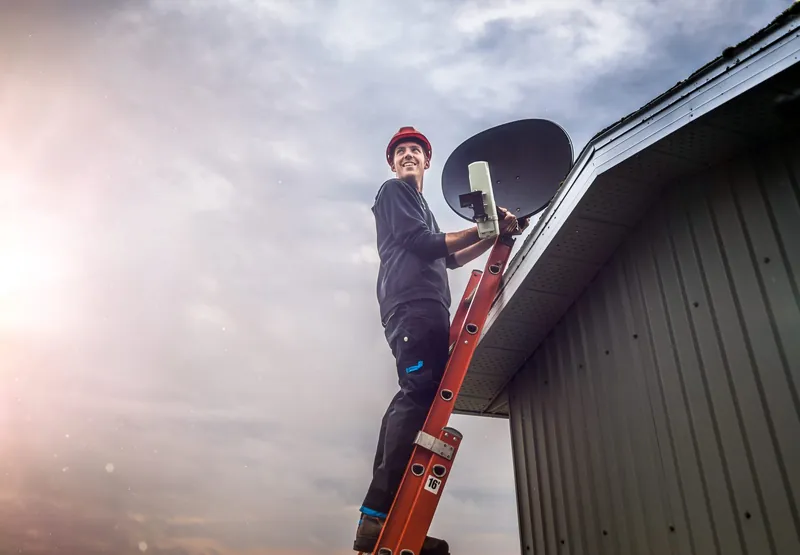
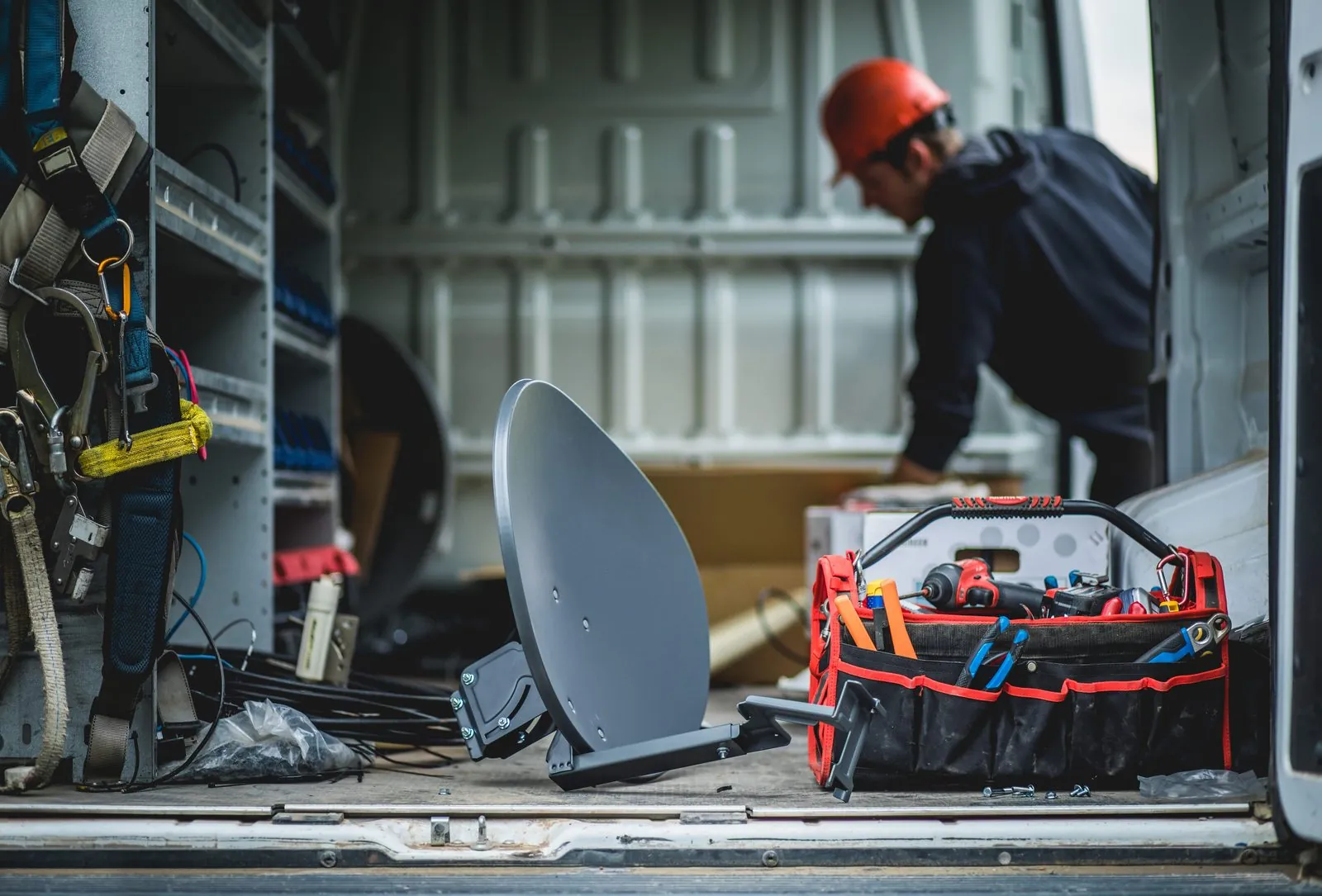
The honest answer to how much DStv installation costs in Gauteng is that it depends on the job. A single decoder on a freestanding house with an easy roof and a short cable run is a very different piece of work from three TV points in a double-storey home, or a shared dish serving a block of flats. Any price you see quoted without someone knowing your property is a guess.
What you can do is understand what goes into the price. Once you know the factors, you can read a quotation properly, compare two of them fairly, and spot the one that has quietly left something out.
The Main Factors Behind an Installation Price
Almost every DStv quote is built from the same handful of variables:
- Equipment needed. Whether you need a new dish, a new LNB or Smart LNB, a switch or multiswitch, or whether existing equipment can be reused.
- Number of TV points. Each extra room means more cable, more connectors and more time.
- Cable distance and route. A long run through a ceiling void, down an internal wall or across a double storey takes longer than a short run through an outside wall.
- Mounting surface and access. Tile, sheeting, concrete, brick, a high gable or a steep pitch all affect how the dish is mounted and how safely it can be reached.
- Decoder type. Explora and XtraView setups have different LNB and cabling needs from a single HD decoder.
- Travel. Where in Gauteng the property is can affect the cost.
New Installation or Repair: Two Different Jobs
A new installation starts from nothing, or close to it. The technician surveys the site, mounts a dish, fits an LNB, runs cable, terminates every point and sets up the decoder. The quote covers equipment plus a full installation.
A repair starts from an existing system that has stopped working properly. The cost depends on what is actually wrong, which is not always obvious until it is diagnosed. A no-signal fault might be a loose connector, a dish knocked out of line, a dead LNB or damaged cable. Each has a very different fix, which is why a repair quote often comes after the fault has been found. If you are dealing with a fault rather than a new setup, our DStv repairs service explains how that process works.
Cost Considerations for Common DStv Jobs
The table below shows what typically drives the price of each type of work. It does not give amounts, because those depend on your specific setup.
| Job | What affects the cost |
|---|---|
| Dish alignment | How hard the dish is to reach safely, whether the bracket or fixings also need attention, and whether the line of sight is still clear. |
| Dish replacement | The dish itself, whether the existing bracket or pole can be reused, the mounting surface, and realignment afterwards. |
| LNB replacement | Which LNB your decoders need (a standard LNB or a Smart LNB for Explora), plus realignment and new connectors where the old ones have corroded. |
| Decoder setup | Whether it is a straight swap on existing cabling or a new decoder type that needs a different LNB or extra cable runs. |
| Cable replacement | Length of cable, the route it takes, how many connectors are needed, and whether walls, ceilings or conduit make access difficult. |
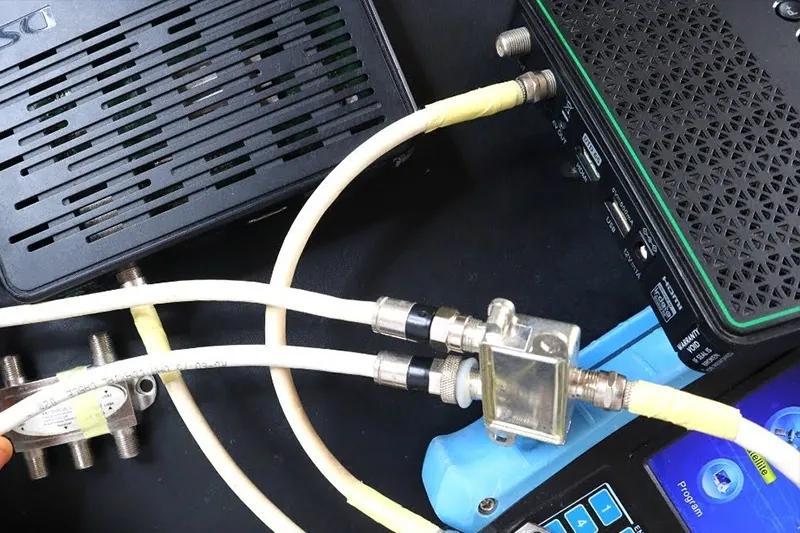
| Additional viewing points | Extra cable to each room, the distribution equipment needed (Smart LNB, switch or multiswitch), and whether decoders are being linked through XtraView. |
For dish and LNB work specifically, our dish and LNB replacement page explains when a part needs replacing and when adjustment is enough.
How Property Type Changes the Work
Installation complexity is closely tied to the kind of building you live or work in. The same decoder can involve very different work depending on where it goes.
Freestanding houses
Usually the most straightforward, although a double storey, a steep or fragile roof, or a long cable route to a back bedroom adds time. Homes with an Explora and one or two extra TVs often use a Smart LNB, which DStv recommends for Explora and most XtraView installations.
Apartments
Flats often connect to a shared dish and distribution system rather than an individual dish. The work may be limited to the unit itself, or it may involve tracing a fault back to building equipment. Body corporate rules usually decide whether a private dish is allowed at all.
Complexes and estates
DStv says its Smart LNB is not generally suitable for multiple unit dwellings, so complexes typically use a shared dish with multiswitch distribution. A new or upgraded system for several units is a larger project, and approval from trustees or the HOA is part of the process. Our complex and estate installation service covers this kind of work.
Commercial properties
Offices, guesthouses, bars and other businesses often need several screens, longer cable runs and distribution equipment suited to commercial use. The quote depends heavily on layout and how many viewing points are needed.
The fastest way to an accurate figure is a short conversation about your property. Call 083 489 1322 and we will tell you what information we need.
Why a DStv Voucher May Not Cover Everything
If you bought a decoder with an installation voucher, it helps to know what DStv's own offer includes. According to DStv's published terms, a voucher installation for an HD Single View decoder includes one TV point, and an Explora or Explora Ultra voucher installation includes two TV points. DStv states that extra travel, cabling or amplification is charged, and that connecting a decoder to more than one TV or linking decoders falls outside the standard voucher package.
So if your home needs a long cable run, a third TV point, or an XtraView link between decoders, expect the additional work to be quoted separately. These are DStv's terms, not OnspotElec's, and they can change, so check the current wording on DStv's website if your voucher is involved.
Questions Worth Asking Before You Accept a Quote
- What equipment is included? Is the quote for a new dish, a new LNB or Smart LNB, cable and connectors, or does it assume your existing parts will be reused?
- How many TV points does it cover? Confirm the number of rooms and whether linking decoders for XtraView is included.
- Is travel included? Ask whether the figure covers getting to your property.
- What happens if something else is found? For example, perished cable inside the roof. Ask how extra work would be agreed before it is done.
- Will signal be measured? A dish aligned with a signal meter has more margin for storms than one lined up by eye.
- Is the installer authorised? Ask whether the business is an authorised DStv installer.
The Cheapest Quote Is Not Always the Best Value
A low quote can be low for good reasons, but it can also be low because corners are cut in places you will not see until summer. The common shortcuts are cheap twist-on connectors instead of properly fitted ones, outdoor joints left unsealed, cable stapled tightly enough to crush it, or a dish aligned just well enough to show a picture on a clear day.
Each of those can show up later as weak signal, dropouts in rain, or an E48-32 no-signal message, and the call-back costs you time and money. When comparing quotes, compare what is being done and fitted, not only the final figure.
How OnspotElec Prices DStv Work
OnspotElec aims to keep pricing competitive, and we base every quote on the actual work and equipment your property needs. We do not publish fixed package prices, because two installations that sound the same on the phone can be very different once the roof, cable route and TV positions are known.
What we do is explain the quote upfront: what equipment is involved, how many points are covered, and what the work includes. If something changes once the technician is on site, it is discussed with you before any extra work goes ahead.
Getting an Accurate Quotation From OnspotElec
You will get a more accurate quote, sooner, if you can share the following:
- Your area in Gauteng and the type of property (house, townhouse, flat, complex or business).
- The decoder or decoders you have or plan to buy.
- How many TVs you want connected, and which rooms they are in.
- Whether there is an existing dish, and roughly how old it is.
- The roof type and whether the house is single or double storey.
- Any body corporate, HOA or landlord rules about dish placement.
If you are still at the planning stage, our guide to getting your property ready for installation covers what to decide in advance.
DStv Installation Cost: Common Questions
We can often give a clear indication once we know the property type, decoder, number of TVs and existing equipment. Where a fault or an unusual roof is involved, the technician may need to see the site first.
Usually, but not always. If the dish, LNB and cabling are all old and damaged, replacing several parts can approach the cost of a new setup. We will explain the options rather than assume.
Each additional point needs its own cable run and connectors, and depending on the decoders, a Smart LNB, switch or multiswitch to feed it. The further the room is from the dish, the more work is involved.
No. Your subscription is between you and DStv. The installation price relates only to the equipment and the work at your property.
Ready to find out what your installation involves? Call OnspotElec on 083 489 1322, any time of day, or send us your details for a quote.