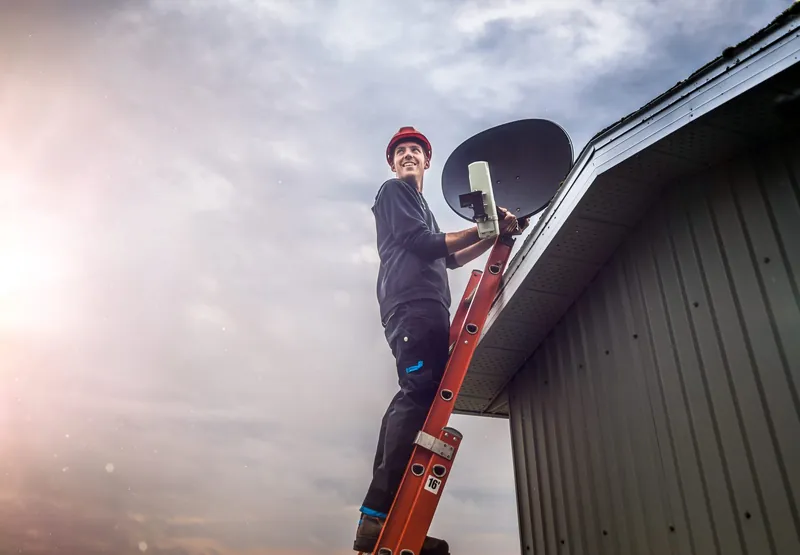
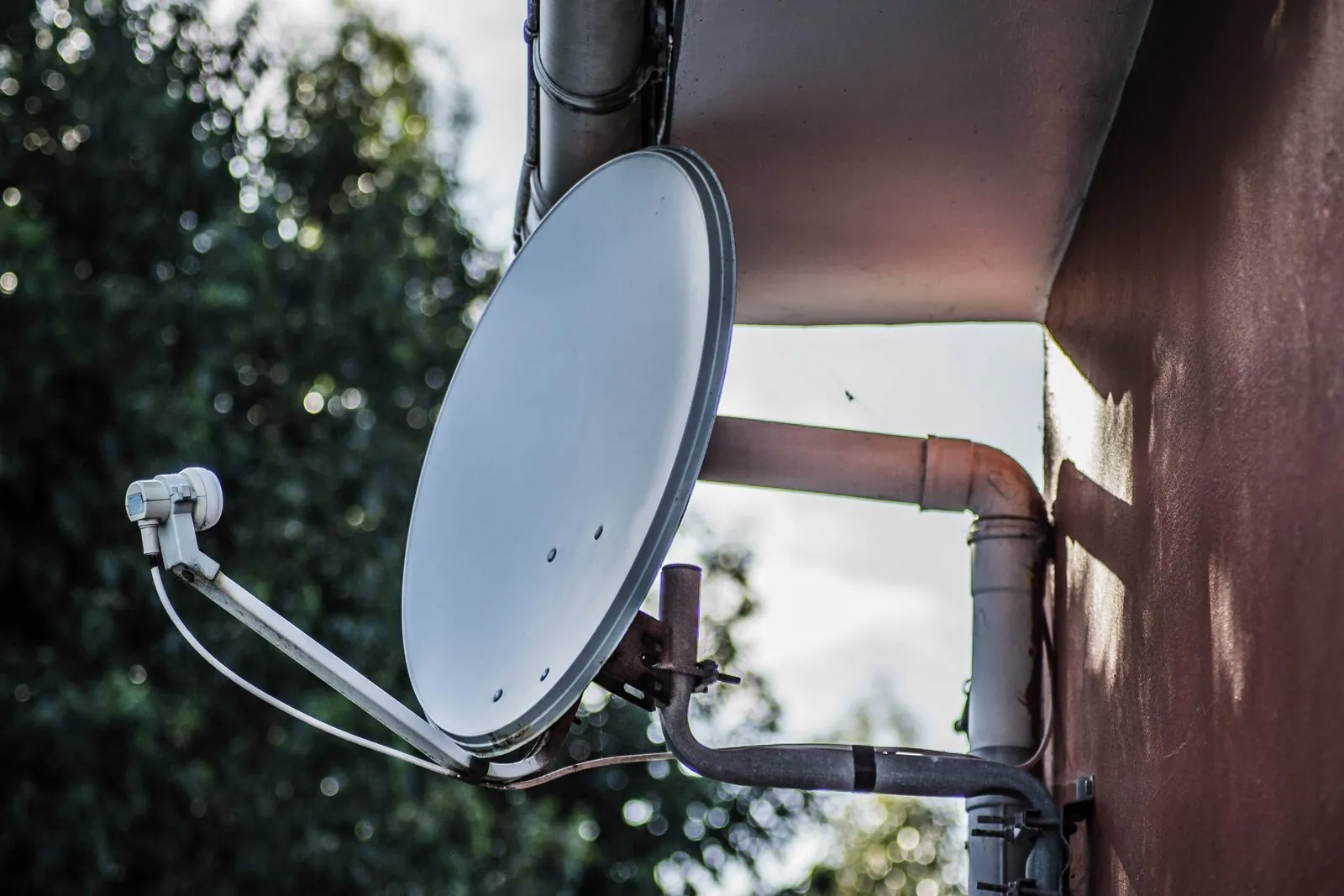
DStv dish alignment means pointing the dish so precisely at the satellite that the signal has plenty of strength to spare. A dish that is only slightly off target may still give a picture on a clear day, then pixelate or cut out as soon as cloud rolls in. OnspotElec tests the signal, works out why it's weak and realigns the dish with a meter for homes and businesses across Gauteng.
Misalignment is one of the most common reasons for poor reception, but it isn't the only one. That's why a proper visit diagnoses the problem first and only then adjusts anything.
Symptoms That Point to a Misaligned Dish
- Pixelation. The image breaks into blocks or smears, especially when there's fast movement on screen.
- Freezing and stuttering sound. The picture stops for a moment and jumps ahead, often with crackling or missing audio.
- Signal lost in light rain. Very heavy downpours can interrupt any satellite service for a short while, but a well-aligned dish shouldn't drop out in a light shower or under ordinary cloud cover.
- E48-32 on some channels only. Channels are carried on different transponders, which are separate signal carriers on the satellite. When reception is marginal, some of them get through while others show the no-signal message.
- A recent change at the property. The trouble started after a storm, roof repairs, painting, or someone working close to the dish.
Our article on alignment symptoms and causes covers these in more depth. If every channel shows no signal, start with the no signal and E48-32 page instead, because a total loss has a wider list of possible causes.
What Pushes a Dish Off Target
A dish only has to move a tiny amount to lose a large share of its signal. These are the usual culprits:
| Cause | What happens | What you might notice |
|---|---|---|
| Strong wind | Repeated gusts twist the dish slightly or work the bracket loose | Reception gets gradually worse over weeks |
| Hail | Impacts bend the reflector or knock the LNB arm | Visible dents, and problems that began after a storm |
| Birds | Birds landing on the dish or LNB arm nudge it, particularly on lightweight mounts | Droppings or nesting material on or near the dish |
| Ladders and roof work | Roofers, painters or gutter cleaners lean against or bump the dish | Signal changed straight after work on the house |
| Loose or rusted brackets | Bolts loosen or corrode and the dish sags | The dish looks lower or tilted when viewed from the ground |
| Tree growth | Branches grow into the line of sight towards the north-east | A slow decline, worse when trees are in full leaf or moving in the wind |
How a Technician Aligns a Dish Properly
Phone apps that show the satellite's position can help point a dish roughly in the right direction, but they aren't accurate enough for the final adjustment. A phone compass is easily thrown off by metal gutters, roof sheeting and the dish itself, and no app can measure the signal the dish is actually receiving. The aim isn't to be close; it's to find the strongest, cleanest signal the dish can deliver.
Check before adjusting
The technician reads the decoder's signal information and inspects the dish, mount, LNB and visible cable, so nothing gets moved that doesn't need to be.
Make the mount solid
Loose bolts, a flexing bracket or a pole that isn't upright are sorted out first, because an alignment on an unstable mount won't last.
Peak on a signal meter
With a meter connected, the dish is moved in small steps side to side and up and down until signal quality reaches its highest point. The bolts are then tightened carefully so the dish doesn't shift as it's locked down.
Confirm at every TV
Signal strength and quality are checked again at the decoder across several channels, and each connected TV point is tested.
Please don't climb onto the roof or prop a ladder against the dish to adjust it yourself. Roof work is dangerous, and a small nudge in the wrong direction usually makes reception worse. Phone 083 489 1322 and a technician can do it safely with the right equipment.
When realignment won't solve the problem
Sometimes the dish is pointing perfectly and the signal is still poor. A failing LNB, water inside the coaxial cable or a corroded connector weakens the signal no matter how well the dish is aimed. In those cases the technician will explain what's wrong and quote for replacing the LNB or repairing the cabling. Where a tree or new building blocks the view and can't be dealt with, the dish may need to move to a new position.
We realign dishes for properties throughout Gauteng, including Kempton Park and Centurion.
Dish Alignment FAQs
Wind is the most common reason. Over months, gusts can twist a dish fractionally or loosen its bolts, and brackets can rust. The change is often too small to see, but enough to weaken the signal.
It can, briefly, in the heaviest rain, because satellite signals weaken in very dense cloud and downpours. Good alignment gives the signal more margin, so outages are shorter and less frequent. If signal doesn't return once the worst rain has passed, something else is wrong.
You usually can't tell from inside the house, because both cause similar symptoms. A technician tests the signal at the dish and at the decoder, which shows whether aiming the dish improves things or whether the LNB or cable is the weak point.
No. Alignment doesn't change any decoder settings. Every decoder fed from that dish benefits from the stronger signal.
OnspotElec is open 24 hours, every day. Call to check availability, as scheduling depends on your location, the fault and which technicians are free.