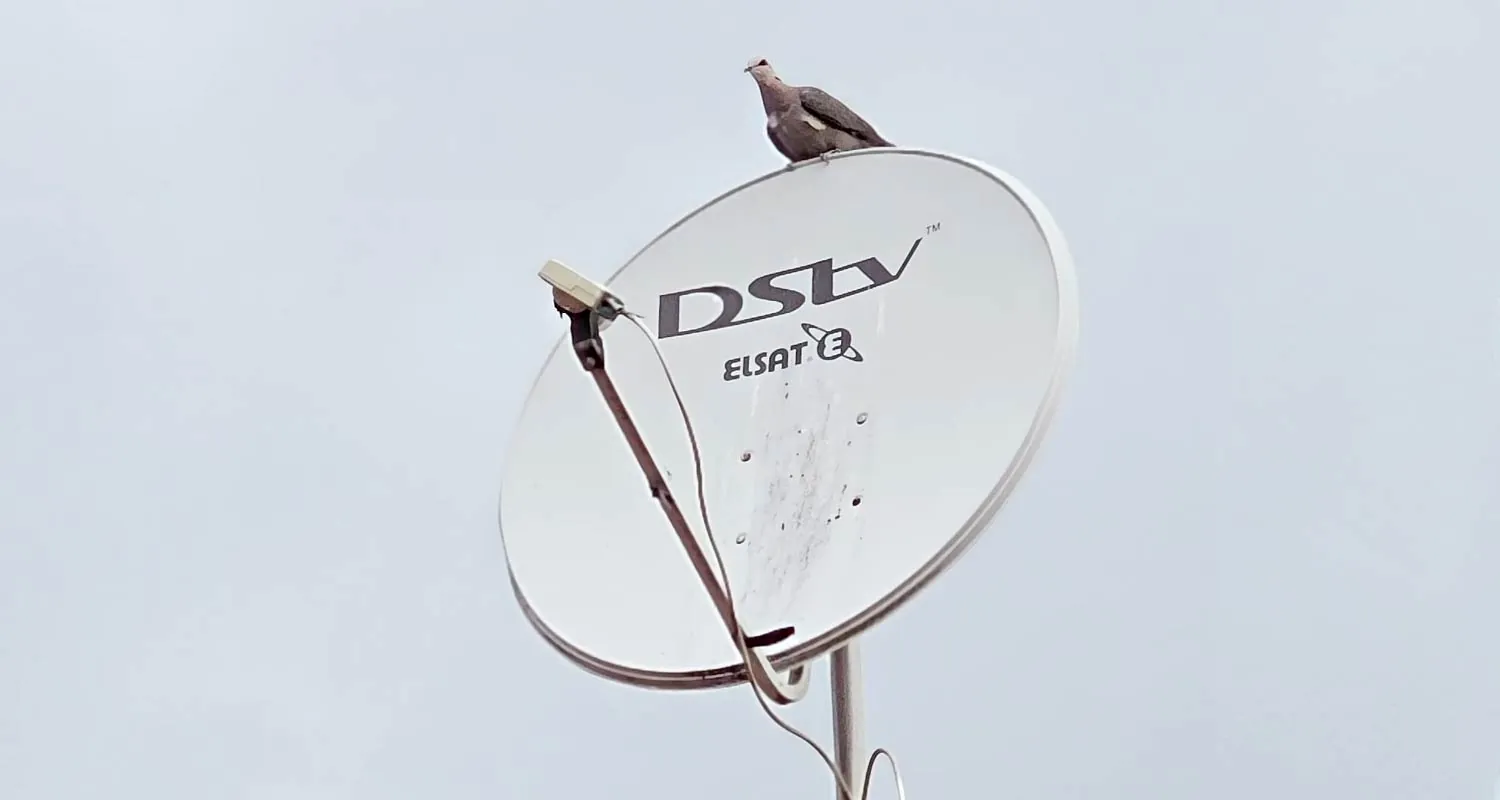
DStv signal problems during heavy rain are expected, and in most cases they are temporary. When a thick storm cloud sits between your dish and the satellite, the signal weakens until the decoder can no longer lock on, and you see a frozen picture or the E48-32 no-signal message. Once the heaviest rain passes, the picture should come back on its own.
What is not normal is signal that fails in every light shower, or that stays off after the sky has cleared. That usually means the storm has exposed a weak installation or caused damage. Here is how to tell the difference, and what to do during and after bad weather.
Rain Fade in Plain English
DStv is broadcast from a satellite on the Ku-band, a range of radio frequencies used for satellite TV. Signals at these frequencies are sensitive to water in the air, so very heavy rain and dense storm cloud absorb and scatter part of the signal before it reaches you. The industry calls this rain fade.
Think of it like driving into thick fog: the road is still there, you just cannot see far enough to carry on. As the storm moves away, the signal strengthens again and the decoder picks it back up. Nothing is broken, and there is nothing to fix indoors.
Gauteng's Storm Season and Your Dish
Gauteng gets most of its rain from summer thunderstorms, roughly October to March. These storms often build in the afternoon, arrive quickly with very heavy rain, and move on again. That pattern makes short DStv outages a familiar part of a Highveld summer.
Not every dish suffers equally, though. A correctly aligned dish with good signal margin, sound connectors and proper weatherproofing rides out more storms, and recovers faster, than one that is only just getting by on a clear day. If your neighbours keep watching through a storm that knocks you off air every time, your installation may be the weak point.
While it is rainingWhat to Do During a Storm
- Wait it out. If the rain is heavy, give it time. Restarting the decoder or fiddling with cables will not bring a signal back through a storm cloud.
- Unplug decoders during electrical storms. If there is lightning nearby, switching off and unplugging your decoders at the wall is a reasonable precaution.
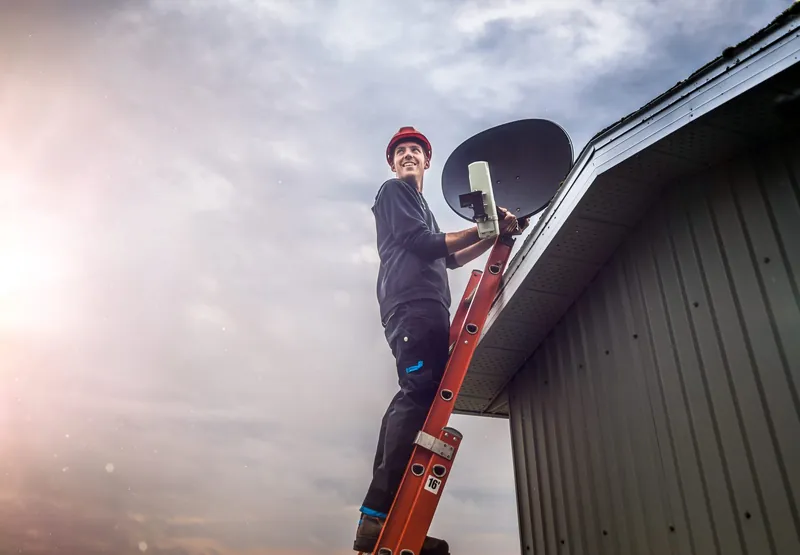
- Stay off the roof and away from the dish. Never go up to check a dish in wet, windy or stormy conditions.
- Note what happens. Pay attention to how heavy the rain was when the signal dropped and how quickly it returned. That detail is useful if you do need a technician later.
When Should the Signal Come Back?
Signal normally returns once the heaviest rain has passed, often while it is still drizzling. There is no exact time, because it depends on the storm and on how much signal margin your installation has. As a general guide:
| What you see | What it usually means | What to do |
|---|---|---|
| Signal drops in a heavy downpour and returns as it eases | Normal rain fade | Nothing; this is expected |
| Signal drops in light rain or drizzle | Reduced signal margin from alignment, connectors or an ageing LNB | Have the installation tested |
| Signal stays off after the rain has stopped | Water ingress, damage or a moved dish | Do the safe checks below, then call an installer |
| Signal returns but keeps breaking up for hours or days | Moisture in a connector or cable | Have the outdoor connections inspected |
| Signal fine, but a subscription message appears | An account issue, not the weather | Contact DStv |
If your signal does not return after a storm has fully cleared, call 083 489 1322. We are open 24 hours and offer emergency DStv assistance.
Hail, Wind and Lightning
Hail
Hail is the kind of weather that can cause physical damage. Large stones can dent the dish reflector, crack the LNB housing or knock the arm out of position. A dented dish does not focus the signal properly, so it may need replacing rather than just realigning.
Wind
Strong gusts push hard against a dish. On a solid, tight mount it usually holds, but a loose bracket or weak wall fixing can let the dish shift a little at a time until the signal is lost. Our guide on signs your dish is out of alignment covers this in more detail.
Lightning
Electrical storms are common in Gauteng summers. Unplugging decoders while lightning is close by is a sensible precaution. If a decoder will not power on after a storm, or the signal fails across the home after a nearby strike, ask a technician to check the equipment rather than trying to open anything yourself.
A Ground-Level Damage Check
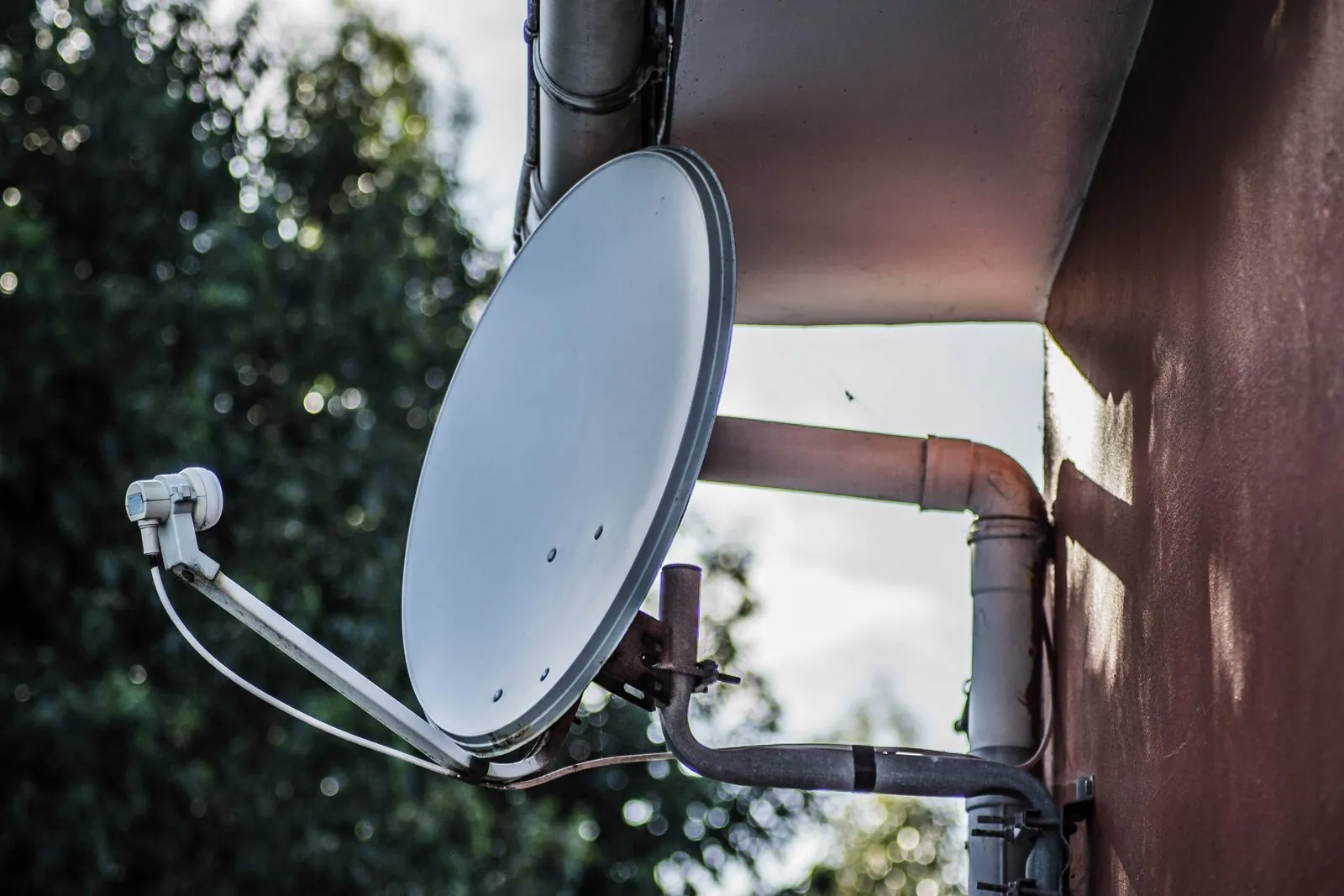
Once the weather has cleared, take a few minutes to look over the installation from the ground or a window. Do not climb onto the roof or up a ladder.
- Dish angle. Compare it with how it normally looks. Is it tilted, drooping or facing a different way?
- Dents and cracks. Look for hail dents in the reflector or cracks in the LNB on the end of the arm.
- The arm and LNB. Check the arm is straight and the LNB is still firmly in its holder.
- Fallen branches. A storm can bring down branches that land on the dish, or bend others into its view.
- Loose or hanging cable. Look for cable that has come away from its clips, been pulled tight or snapped.
- Water around entry points. Indoors, check where the cable comes through the wall or ceiling for damp or staining.
If you spot damage, or the signal is not right even though everything looks fine, a technician can test the full chain from dish to decoder. Water-damaged connectors and cables are often replaced as part of cable and connector repairs.
Making Your Installation More Weather-Resistant
You cannot stop rain fade in the heaviest storms, but you can make an installation less vulnerable to everyday bad weather.
- Accurate alignment. A dish peaked with a meter has more signal to spare when the clouds roll in.
- Sealed outdoor connectors. Weatherproofed joins keep water out of the cable.
- Sound cable. Replacing cracked, sun-perished cable stops moisture creeping in.
- A solid mount. A firm bracket keeps the dish on target through wind.
- A clear view of the sky. Trimming trees towards the north-east avoids adding another obstacle on top of the rain.
The dish alignment and signal testing service covers the first of these and is a good starting point before storm season.
Rain and DStv: Common Questions
Yes. Very heavy rain weakens the satellite signal for a short time. It should come back as the heaviest rain passes.
That usually means the installation has lost signal margin, often through alignment drift, water in a connector, worn cable or an ageing LNB. It is worth having it tested.
Unplugging decoders at the wall during electrical storms is a reasonable precaution.
No. Rain on the dish surface is not the main problem; the storm cloud and rain between the dish and the satellite are what weaken the signal. Going up to the dish in wet weather is also dangerous.
Moisture in an outdoor connector or damaged cable is the most likely cause. A technician can inspect the connections and replace anything water-damaged.
If storms keep knocking your DStv off air, or the signal has not returned after the weather cleared, OnspotElec can help. We are an authorised DStv installer serving homes and properties across Gauteng, open 24 hours, every day. Call 083 489 1322 to check availability.