DStv installation for complexes works differently from a freestanding house. There may already be a shared dish on the roof feeding every unit, the body corporate may control where a dish can go, and a fault in one unit can be anything from a loose wall plate to a failing amplifier serving the whole block. OnspotElec is an authorised DStv installer serving sectional title complexes, security estates, apartment blocks, new developments and landlords with rental units throughout Gauteng.
This page is for individual owners and tenants as well as the people who look after the building.
One Shared Dish or a Dish Per Unit?
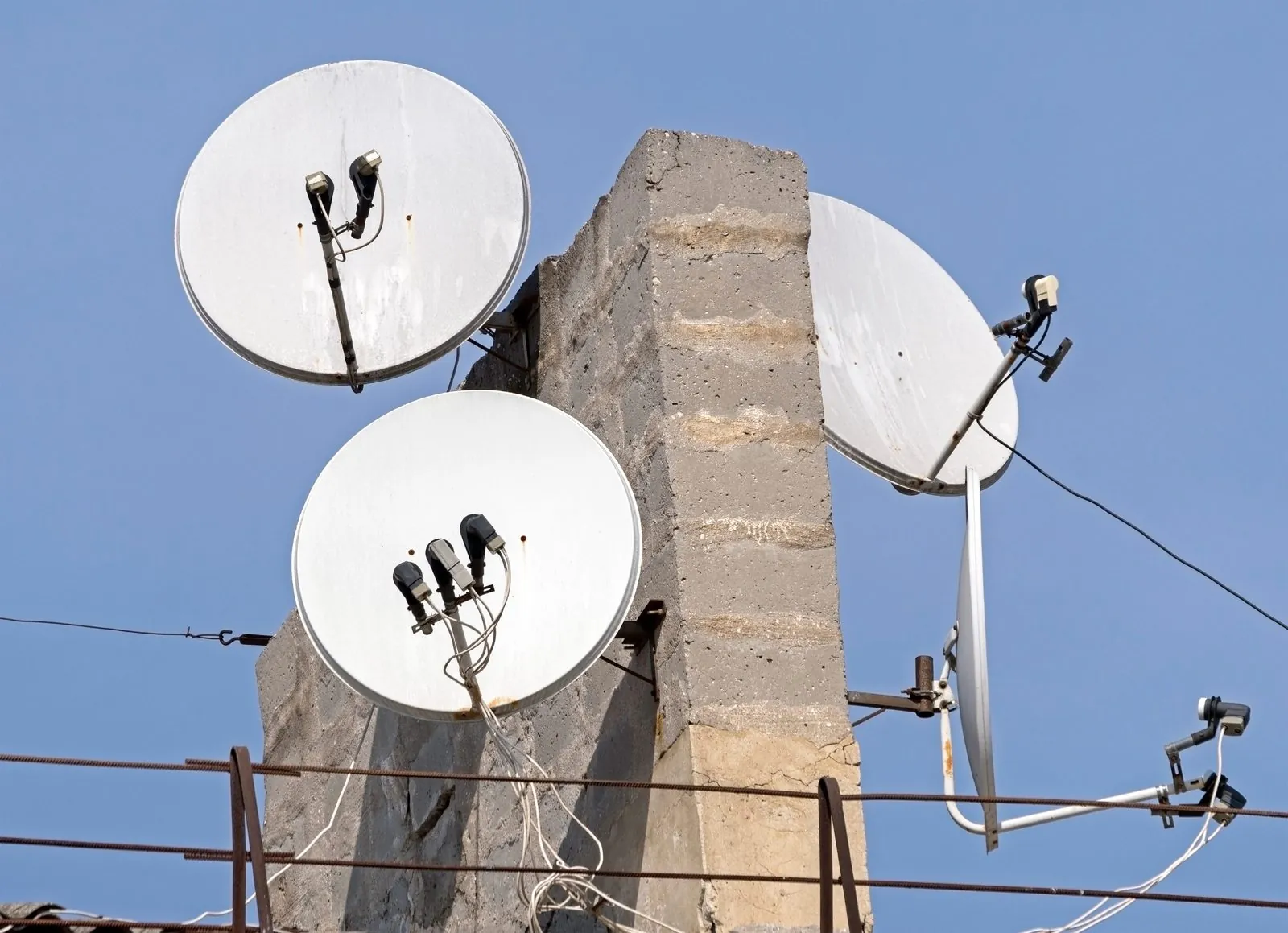
Most multi-unit buildings use one of two approaches. Each has a place, and the right choice usually depends on the building rules as much as the technology.
| Shared dish with multiswitch distribution | Individual dish per unit | |
|---|---|---|
| How it works | One dish, or a small group of dishes, on the roof feeds a multiswitch that sends signal to each unit through the building's cabling | Each unit has its own dish, LNB and cable, usually on a wall or balcony |
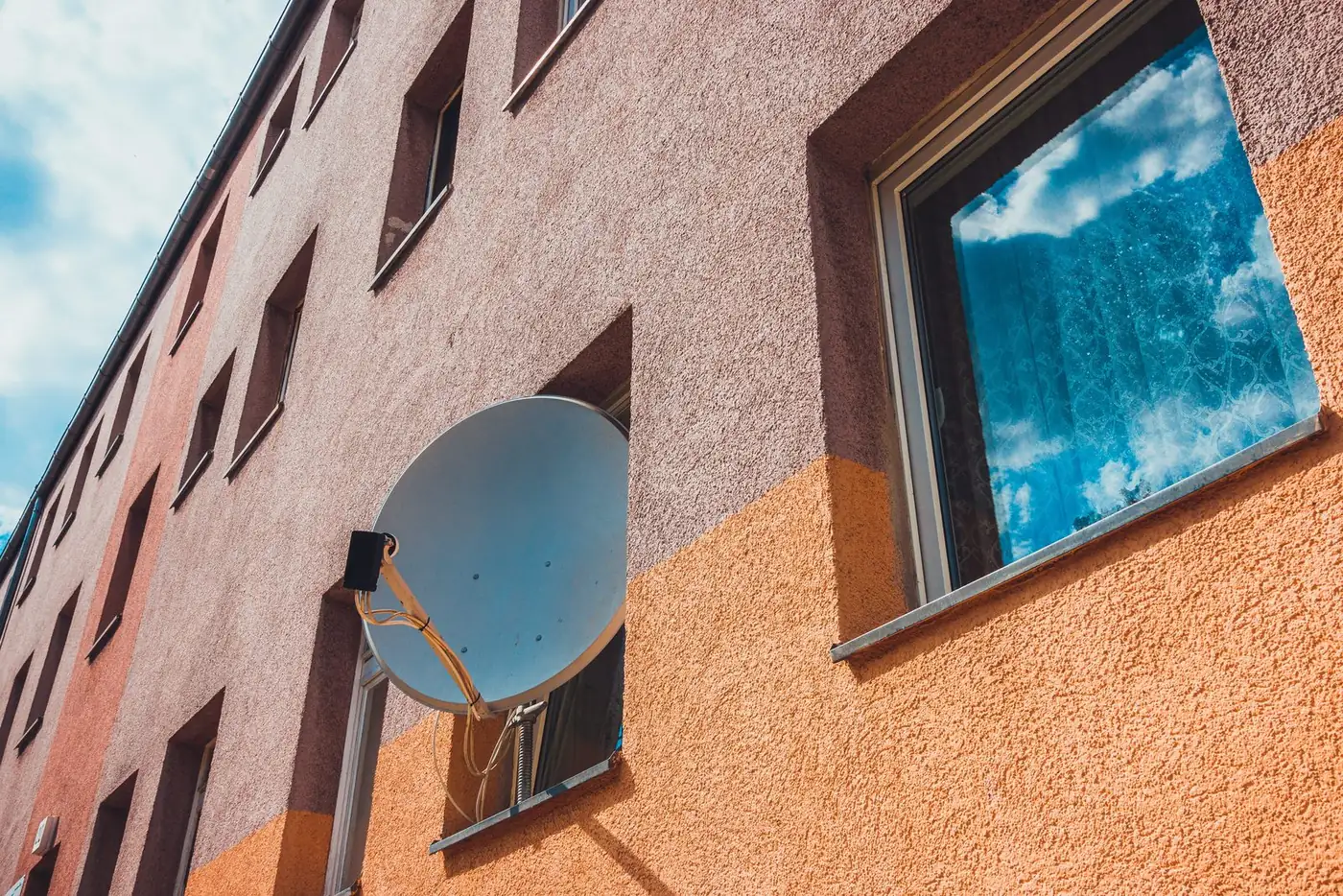
| Appearance | Tidy; one installation instead of many dishes on the walls | Can clutter facades, which is why many complexes restrict it |
| Who looks after it | Usually the body corporate, HOA or owner of the building | Usually the unit owner or tenant |
| When a fault happens | May affect one unit, a floor or everyone, depending on where it is | Affects only that unit |
| Main limitation | Old systems may only provide one feed per unit, which limits PVRs and XtraView | Needs a mounting spot with a clear view of the north-eastern sky, which not every unit has |
One point that often comes up: DStv's own product information says the DStv Smart LNB is not generally suitable for multiple-unit dwellings such as complexes and apartments. Shared buildings normally rely on multiswitch distribution instead. That's why the advice you get for a house doesn't always apply to a flat.
Approvals and Rules to Sort Out First
Most delays on complex jobs come from permission, not equipment. Running through this list before booking saves everyone time.
- Conduct or HOA rules. Sectional title schemes and estates usually have rules on where dishes can be mounted, what colour they can be and whether individual dishes are allowed at all. Check with the body corporate, trustees or HOA.
- Managing agent contact. Access to the roof, plant rooms or distribution cabinets is normally controlled by the managing agent or caretaker. Let us know who to arrange access with.
- Landlord permission for tenants. If you rent, get written permission from the landlord or agent before a dish is fitted or cable is run.
- Estate access procedures. Gate access, contractor registration and permitted working hours vary between estates. Tell us what applies so we can plan the visit.
- Who is paying for what. Shared equipment on the roof is usually a body corporate matter. Cabling and equipment inside a unit is usually the owner's. Agreeing this up front avoids awkward conversations later.
Landlords may find our article on DStv for rental properties helpful when deciding what to provide for tenants.
Trustee or managing agent looking after a shared system? Call 083 489 1322 to talk through the building before booking an assessment.
Finding Faults Unit by Unit
When one unit loses signal on a shared system, the question is whether the fault is in that unit, on that floor's cabling or in the main equipment. We work through it in order.
Establish who is affected
One unit, a group of units, or everyone. A building-wide outage points to the dish, LNB, multiswitch or power to the distribution equipment.
Test at the unit's wall point
A signal reading at the wall plate shows whether the problem is inside the unit (decoder, fly lead, connector) or upstream.
Trace back to the tap-off or multiswitch
We test the feed where that unit's cable leaves the distribution equipment to isolate the cable run between the two.
Check the head-end
If several units are affected, the dish alignment, LNB, amplifier and multiswitch are checked and tested.
Repair and record
We fix what we can, and explain clearly which part was faulty so the body corporate or owner knows who is responsible.
Some older buildings have cabling buried in walls with no spare conduit. If a cable inside a wall has failed, replacing it may not be possible without an alternative route, and we'll tell you that plainly. Damaged connectors and fly leads are covered on our cabling repairs page.
Upgrading Old Shared Systems and Planning New Developments
Many shared systems were installed when one decoder per unit was the norm. They often deliver one feed to each unit, which suits an HD Single View but limits an Explora's recording and rules out XtraView. Bringing such a system up to date may involve extra multiswitch outputs, additional cable runs to each unit or replacing distribution equipment. What's achievable depends on the existing conduit, the space in the plant room and the budget the owners agree on, so we assess before quoting.
New builds and conversions
For developers, the easiest time to get DStv right is before the walls are closed. Plan conduit from the roof to each unit with space for more than one cable, a central location for distribution equipment with power and ventilation, and a roof position with a clear view of the sky towards the north-east that won't be blocked by later phases. The article on DStv for newly built properties covers the same principles for single homes.
We work with complexes and estates across Gauteng, including Fourways, Midrand and Pretoria East.
Complex and Estate DStv Questions
Only if the conduct or HOA rules allow it. Many complexes require units to use the shared system or restrict dish positions. Check with the body corporate or managing agent first.
It depends on whether the system can give your unit more than one feed. Older systems often can't without an upgrade. We can test your wall point and tell you what is possible.
DStv says the Smart LNB is not generally suitable for complexes and apartments. Shared buildings normally use multiswitch distribution instead.
That depends on your scheme's rules. Shared roof equipment is usually the body corporate's responsibility; equipment inside a unit is usually the owner's. We report clearly where the fault was.
Yes. We can arrange access, assessments and quotes through the managing agent, trustees or building owner.