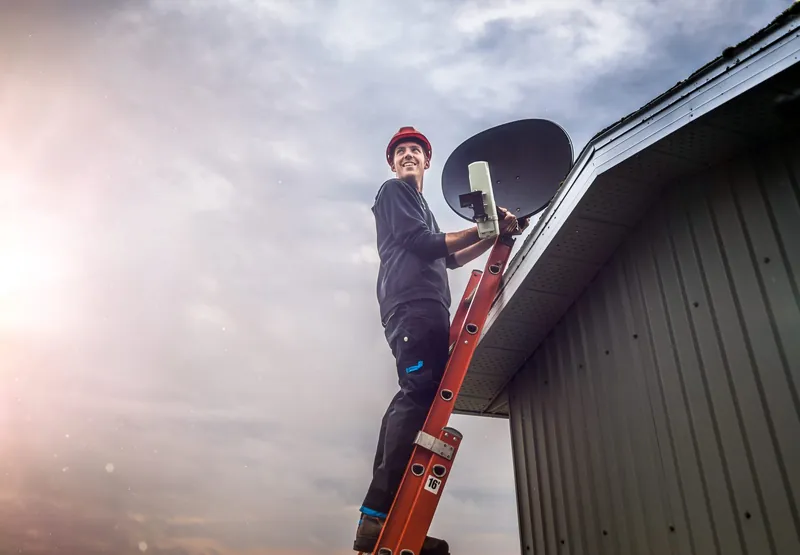
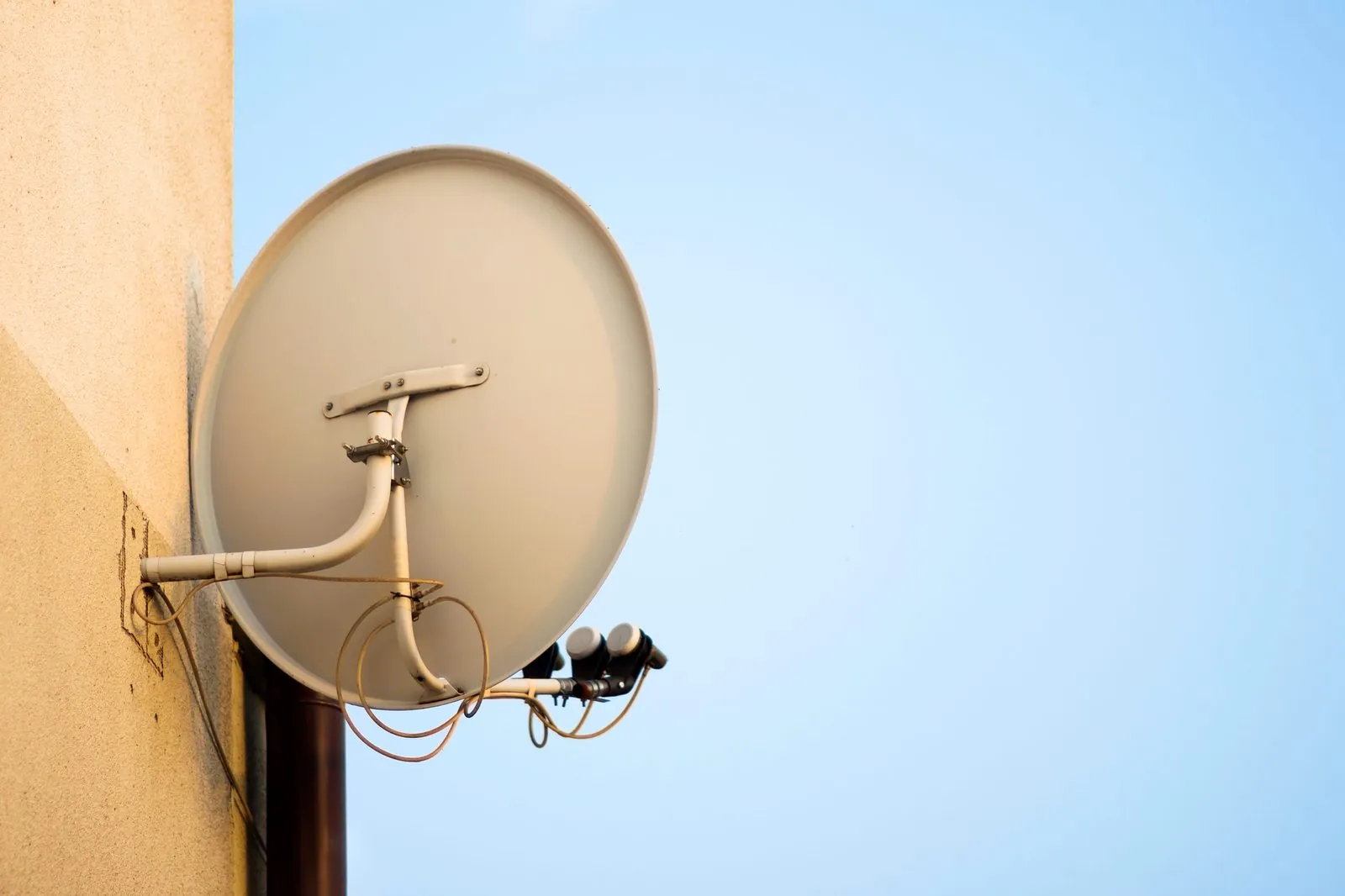
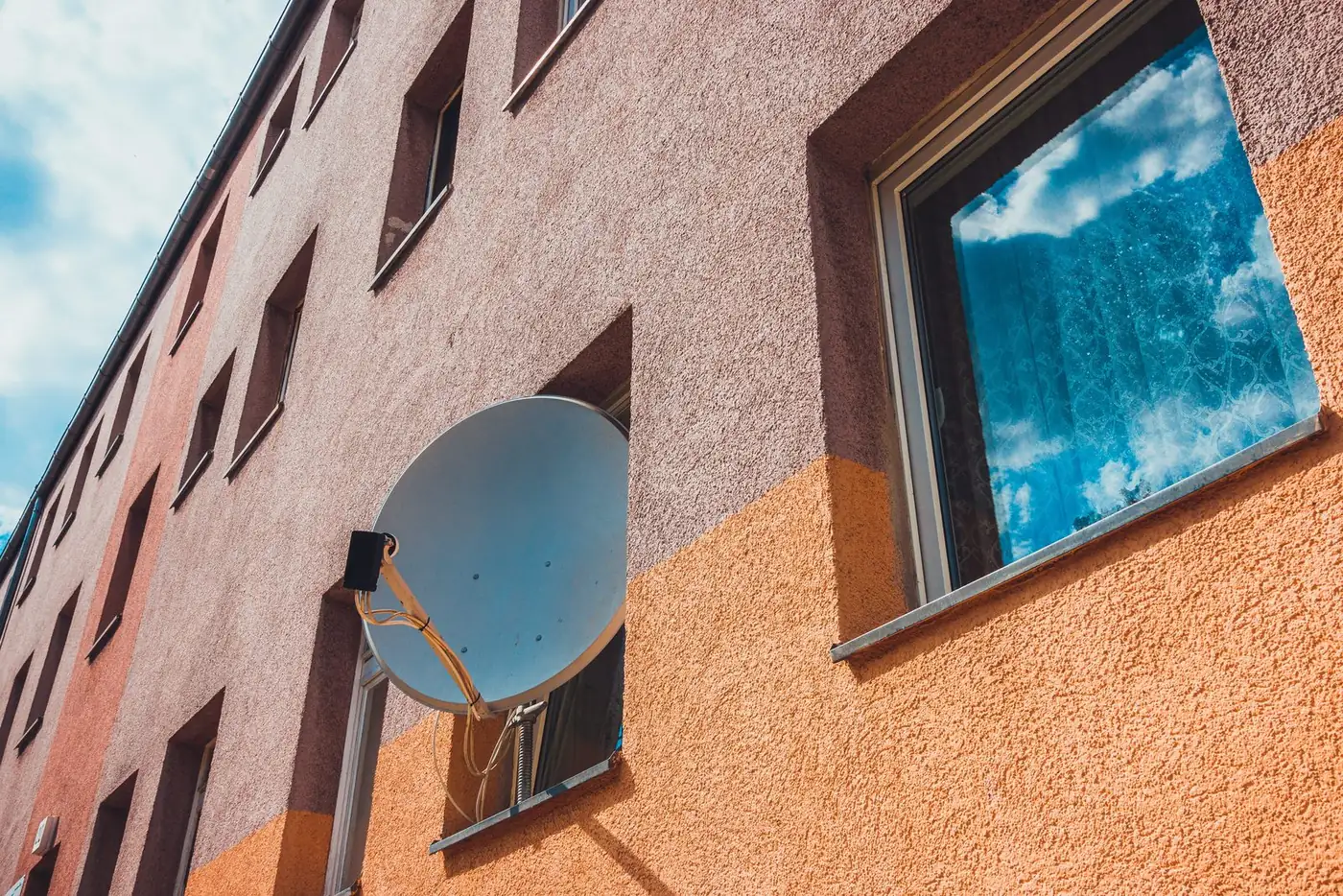
Before moving a DStv dish, check four things: that the new position has a clear view of the north-eastern sky, that there is a solid surface to mount it on, that the cable can reach your TV points by a sensible route, and that you have permission if you are in a complex or renting. Whatever the reason for the move, the dish will need to be realigned at its new spot, because even a few centimetres of change in position or angle can lose the signal.
Below is a planning guide for the most common situations, from roof work and solar panels to moving house.
Common Reasons People Move a Dish
- Renovations and extensions. A new room, a raised wall or a second storey can either be in the way of the dish or block its view of the sky.
- Roof replacement or repairs. Roofers often need the dish off the roof while they work, and it rarely goes back in exactly the same place.
- Solar panels. Panels often need the same sunny, north-facing roof space a dish uses, and a dish can cast shade on them.
- Tree growth. A tree that was small when the dish went up may now be in its line of sight. Trimming is sometimes enough; sometimes moving is the better long-term answer.
- A neighbour has built. A new double-storey or boundary wall next door can block a view that was clear for years.
- Moving house. Taking your setup with you, or setting up at a new property, raises its own questions, covered further down.
A Relocation Checklist for the New Position
- Clear line of sight. DStv comes from the Intelsat 20 satellite, and from Gauteng the dish points roughly north-east and upwards. Nothing should sit in that direction: trees, walls, chimneys, gables or future building work.
- Room to grow. Think ahead. A young tree, a planned extension or an empty plot next door can block the new spot within a few years.
- A solid mounting surface. The dish can go on a wall bracket, a fascia, a pole or a roof mount. It has to be fixed to something firm enough that wind cannot shift it.
- Cable length and route. Moving the dish often means the old cable is too short. Extending it with joins adds weak points, so a fresh cable run is usually better.
- Distance from power lines. The dish and its cabling must be kept well clear of overhead power lines.
- Access for future work. A position an installer can reach safely makes later maintenance easier.
Our article on choosing the right position for a satellite dish goes into more detail on what makes a good spot.
Wall Bracket, Pole or Roof Mount?
The mount often decides where a dish can go. Each type suits different properties.
| Mount type | Where it works well | Things to watch |
|---|---|---|
| Wall bracket | A solid brick wall or gable end with a clear view north-east | The wall itself must not be in the dish's way, and it needs to be high enough to see over boundary walls |
| Fascia mount | Under the roof edge, often where walls are not suitable | The fascia board must be sound; old or rotting boards cannot hold alignment |
| Pole or mast | Where the dish needs extra height to clear trees or buildings | The pole must be secured firmly so it does not sway |
| Roof mount | When no wall or fascia position has a clear view | Roof fixings need to be sealed against leaks, and roof access is installer work only |
Complexes, Estates and Rental Properties
Sectional title complexes and estates usually have conduct rules or HOA rules about where dishes may be mounted, and some may not allow individual dishes at all where the building uses a shared dish. Before you move a dish, check with your body corporate, trustees, HOA or managing agent. If you are renting, get your landlord's permission first, preferably in writing.
If your complex runs a shared system, a move may not be needed; the answer may be a connection to the communal distribution instead. See our service for complexes, estates and apartment blocks.
Renovation starting soon? Ask your builder or roofer not to unbolt and refit the dish themselves. Call 083 489 1322 and we can plan the removal and reinstallation around their schedule.
Moving House: What Goes With You and What Stays
When you move house, your DStv subscription is linked to your decoder, not to the dish. The decoder is what you need to take with you. The dish, LNB and cabling are fixed to the building, and whether they go or stay is something to agree with the buyer, seller or landlord.
| Item | Usually | Why |
|---|---|---|
| Decoder, remote, power supply and any smartcard | Take it | These are yours and are tied to your DStv account |
| Wi-Fi connector or HDMI cables | Take it | Small accessories that are easy to leave behind by accident |
| Dish and LNB | Often stays, by agreement | Removing it leaves holes and may break the fixing; the new home may already have one |
| Cabling inside walls and roof | Stays | It is part of the building and cannot be reused elsewhere |
If the new property already has a dish, do not assume it will work with your decoder. It may be misaligned, have the wrong LNB for an Explora or XtraView, or have cabling that has been damaged. Having it tested before you unpack the TV saves frustration.
Remember to update your address and details with DStv through DStv's self-service channels. Account and subscription changes are handled by DStv, not by an installer.
Why Realignment Is Always Part of the Job
A satellite dish is aimed at a point in the sky about 36,000 kilometres away. A tiny change in angle at the dish adds up to a large miss at the satellite. Moving the dish, even to the other side of the same wall, means it has to be aimed again from scratch.
Proper alignment is done with a signal meter, adjusting until the signal quality is as strong as it can be, not just until a picture appears. A dish that is only just aligned may work on a dry day and drop out in the first summer storm. Our dish alignment service explains this in more detail.
How a Dish Relocation Visit Works
Choose the new spot together
We check line of sight, mounting options and the cable route, and talk through any upcoming building work.
Remove the dish carefully
The dish, LNB and bracket are taken down without damaging them, so they can be reused if they are in good condition.
Mount and run new cable
The dish is fitted at the new position and cable is run to your TV points with proper, weatherproofed connectors.
Align and test
The dish is aligned and the signal is tested at each decoder before we leave.
More on the service side is on our dish relocation and reinstallation page.
Dish Relocation Questions
Usually, if it is in good condition. A dented, rusted or bent dish is better replaced while it is down anyway.
They can put it back up, but it will almost certainly need realigning, and roofers rarely carry a satellite signal meter. It is better to have an installer refit it.
Not always. Trimming the tree may be enough if it is a small obstruction. If the tree is large, protected or belongs to a neighbour, moving the dish may be more practical.
It should not, provided the LNB and cabling to each decoder are kept the same type. A move is also a good time to check that the LNB suits your decoders.
Yes, keep your details up to date with DStv through its own channels. An installer can only help with the equipment side.
It depends on the new position, the mount, how much new cable is needed and how many TV points there are. We quote once we know the details.
Getting the dish sorted early saves you from a silent TV in the middle of a renovation or a move. OnspotElec is an authorised DStv installer working across Gauteng, from Pretoria East to the West Rand. Call 083 489 1322 to talk through your plans, or request a quote online.