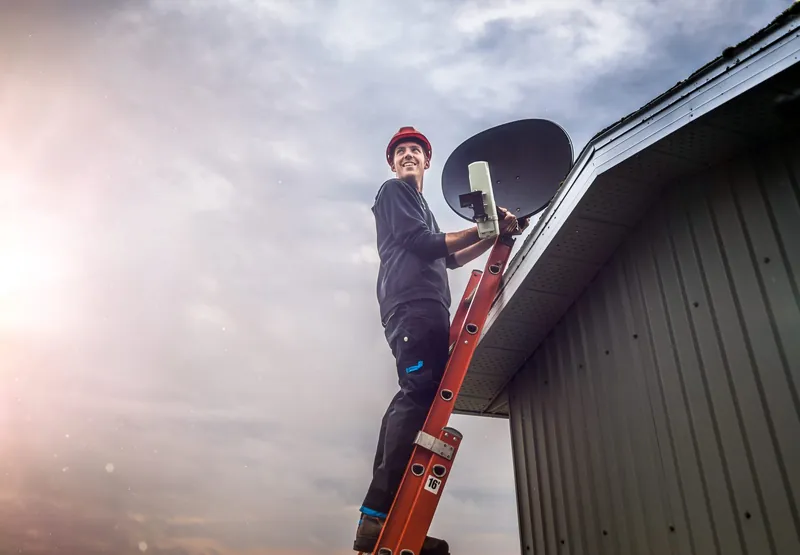
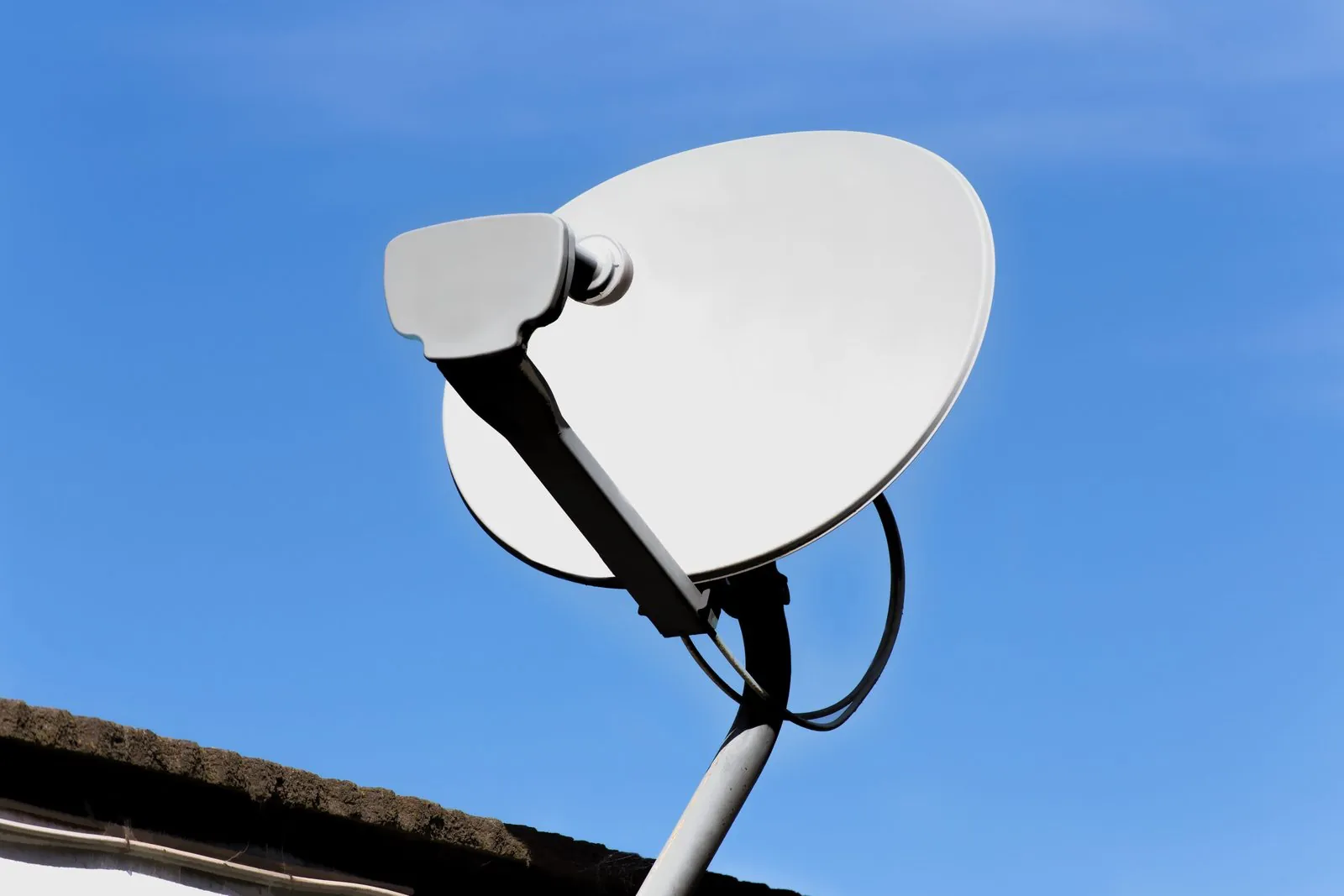
The right position for a satellite dish is one with a clear, lasting view of the north-eastern sky, on a solid mount, with a short and protected cable route to your TVs, and in a spot that can be reached for maintenance. Signal comes first, but it is not the only thing that matters. A dish that works today can be blocked in a few years, catch every gust of wind, or break your complex's rules.
Your installer will make the final call with a signal meter on the day. Knowing the trade-offs beforehand means you can have a useful conversation about where the dish goes, rather than finding out later that it is in the wrong place.
Start With the View of the North-Eastern Sky
DStv is received from the Intelsat 20 satellite, which sits over the equator. From Gauteng, that means a dish points roughly north-east and is tilted upward. Whatever the dish faces in that direction must be open sky: no trees, walls, roof peaks, chimneys or neighbouring buildings in the path.
This single requirement rules out a lot of spots straight away. A south-facing wall usually cannot work unless the dish is raised on a pole or bracket high enough to clear the roof. A low position on a north-facing wall might be fine, or might be blocked by a boundary wall or the house next door. An installer checks the line of sight on site; you can save time by noticing which side of your property has the most open view towards the north-east.
Thinking aheadPlan for the View You Will Have Later
The most common reason a good installation goes bad is that something grows or gets built in front of the dish. When choosing a position, look at what might change, not just what is there now.
- Trees grow. A young tree that is well below the dish's line of sight today can fill it within a few seasons. Deciduous trees can also look clear in winter and block the view once they are in full leaf in summer.
- Neighbours build. An open stand next door, or a single-storey house that could add a second floor, is a risk if it sits in the north-eastern path.
- Your own plans count too. A future carport, patio roof, solar panels or extension can block your own dish. Factor them in now rather than paying to move it later.
- Complexes change. New units or extra storeys on neighbouring blocks can affect dishes in the same estate.
Leafy suburbs, such as many in Johannesburg and Pretoria, are where tree growth most often catches people out. A slightly higher mount may cost more upfront but can save a relocation down the line.
Wall, Roof or Pole: Comparing Mounting Options
The mount matters as much as the position. A dish that moves even slightly will lose signal, so it needs a fixing that stays put.
| Mount | Works well when | Things to consider |
|---|---|---|
| Wall bracket | A solid brick or concrete wall has a clear view to the north-east | Usually the simplest and easiest to reach. Not suitable on weak plaster, cladding or fascia boards. |
| Roof mount | Walls are blocked and the roof has the only clear view | Needs careful fixing and sealing to avoid leaks. Harder and riskier to reach for maintenance. |
| Pole or mast | The dish needs extra height to clear an obstruction, or no suitable wall exists | Must be well anchored and rigid. Taller poles catch more wind. |
| Shared dish in a complex | A body corporate or landlord provides a central dish and distribution | Individual dishes may not be allowed. Faults are often handled through the managing agent. |
In complexes and apartment blocks, a shared dish with multiswitch distribution is common. DStv itself notes that its Smart LNB is not generally suitable for multiple-unit dwellings, so these buildings usually need a different setup. Our complex and estate installation page explains how that works.
Wind Exposure and Weather
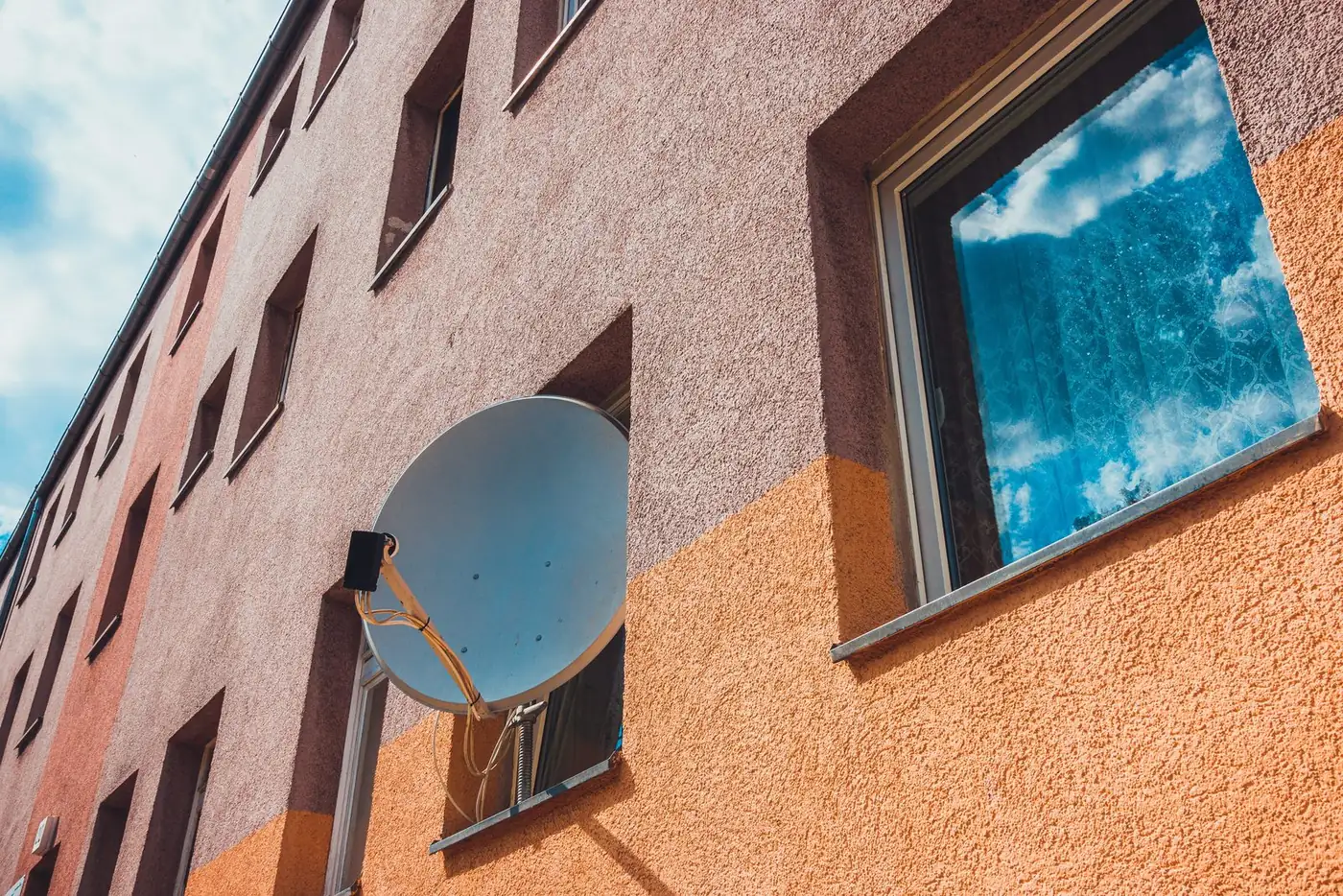
Highveld storms bring strong gusts, and a dish acts like a small sail. Exposed corners, roof ridges and tall poles get the worst of it. A slightly more sheltered spot, as long as it still has a clear view, puts less strain on the bracket and keeps the dish aligned for longer.
Think about hail too. There is no fully protected position, but a dish under the edge of an eave (with the view still clear) is less exposed than one on an open roof. Cable runs also last longer when they are not stretched across sun-baked surfaces all day.
Keeping It Reachable for Maintenance
A dish will need attention at some point, whether it is a new LNB, a realignment after a storm or a connector replacement. A position that can be reached safely with a ladder from level ground is cheaper and quicker to service than one on a steep roof or above a drop.
That does not mean it should be low enough to reach from the ground, which raises security and accidental damage concerns. The aim is a spot a technician can reach safely, but a passer-by cannot.
Never climb onto your roof to scout dish positions or hold up a dish to "test" a spot. Leave height work to the installer, and keep dish and cable work well away from overhead power lines. Call 083 489 1322 to arrange a site assessment.
The Cable Route Matters Too
Every dish needs coaxial cable to reach each decoder. A good position keeps that route sensible.
- Shorter is better. Long cable runs lose more signal and give more places for damage. A dish on the opposite side of the house from the TVs means longer runs.
- Fewer joins. Every connector is a possible weak point, especially outdoors.
- Protected runs. Cable that runs through ceilings or conduit lasts longer than cable exposed to sun and rain, provided rodents cannot get to it.
- Sensible entry points. Where the cable enters the house should be sealed against water and close to where it needs to go.
- Room for more TVs. If you might add XtraView or another viewing point later, plan for it now.
Extra cabling and additional TV points affect the quote, which is one reason an installation quote can differ from a standard voucher installation. The guide to preparing for an installation has more on getting ready.
Appearance, Complex Rules and Permission
A dish is visible, and some positions look neater than others. Mounting it on a side or back wall, or keeping cable runs tidy and painted to match, can make a real difference to how it looks from the street.
In sectional title complexes and estates, the choice is often not entirely yours. Conduct rules or HOA rules usually specify where dishes may go, or whether a shared dish must be used. Check with the body corporate, trustees, HOA or managing agent before booking an installation or a move. Tenants should get the landlord's permission first.
Security and Accidental Damage
A dish within easy reach of the ground is easier to knock, tamper with or damage. Exposed cable along a boundary wall or in an open yard can also be cut or pulled. Where possible, position the dish and route the cable so they are out of casual reach, and so they do not interfere with security lights, cameras or beams on the property.
Dish Position Questions
Only on a wall with a clear view of the north-eastern sky and a solid surface for the bracket. South-facing walls usually need a pole or extended bracket to clear the roof.
No. Many dishes are on walls or poles. The roof is usually used only when it is the one place with a clear line of sight.
Yes, if it is in the dish's line of sight. Leaves and branches block satellite signal, and the problem often gets worse as the tree grows.
Usually, yes. Relocation is common after renovations, roof work or when trees have grown. Read what to consider before moving a dish first.
Getting the position right at the start makes everything else easier. OnspotElec is an authorised DStv installer working across Gauteng, and we can assess your property for a new DStv installation or a move. Call 083 489 1322; the quote is based on the position, the mount and the work required.