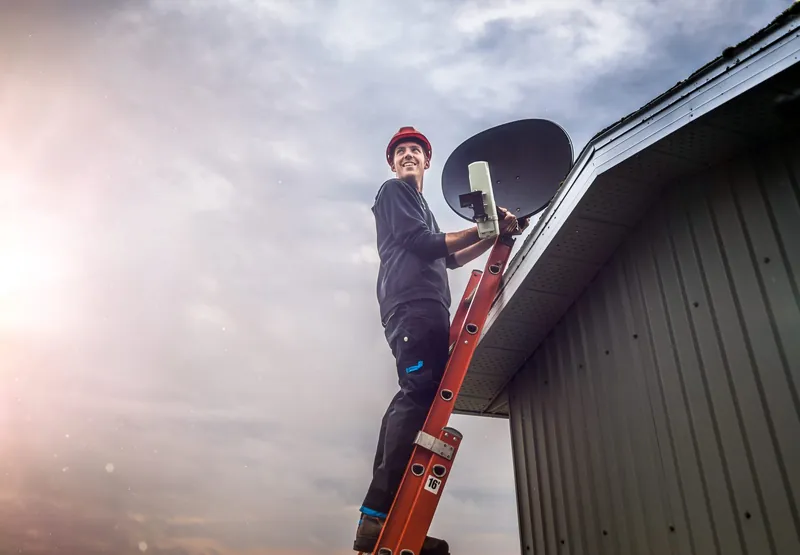
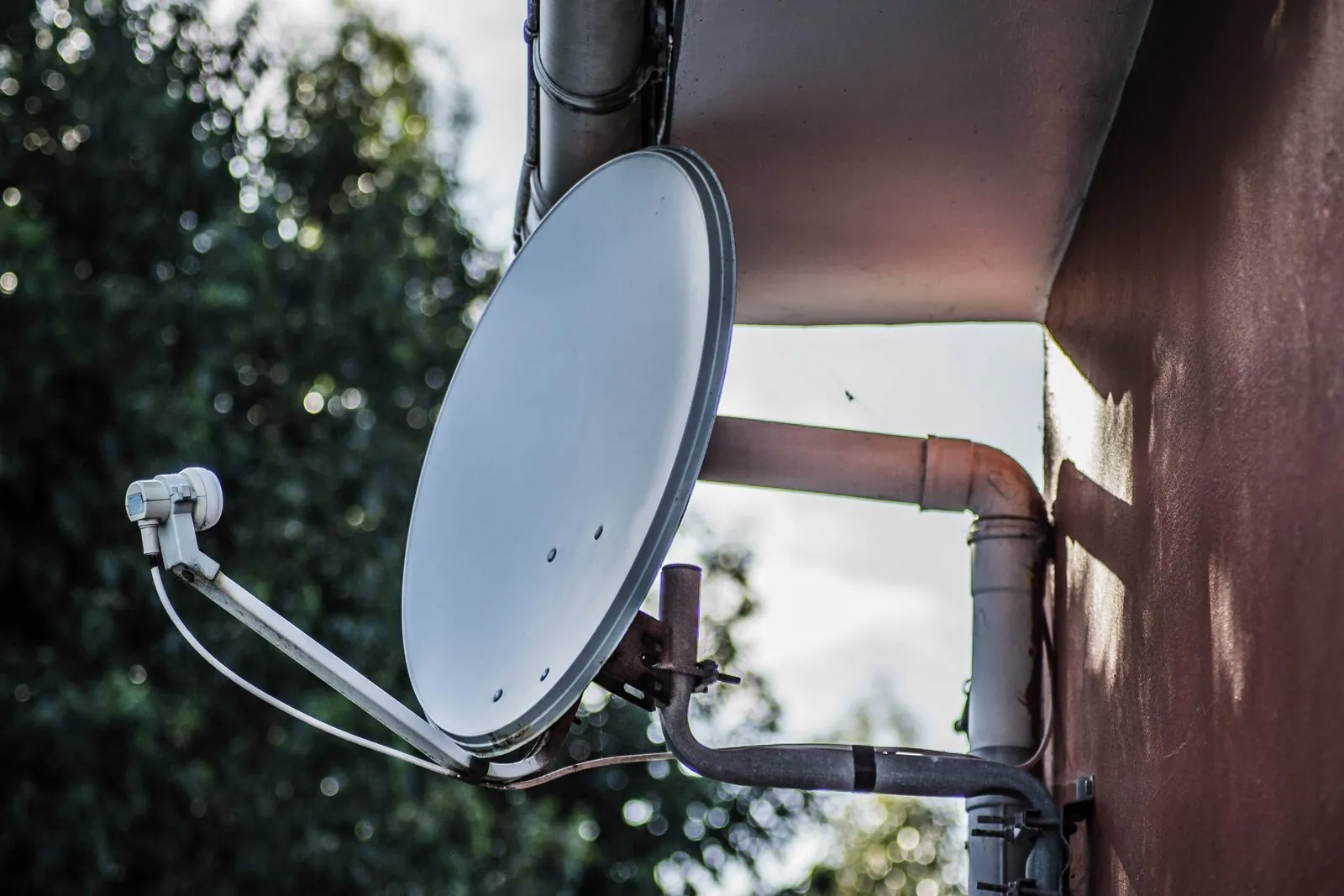
If you need DStv installation in Johannesburg, the property usually shapes the job more than the decoder does. An older house in Westdene, a Killarney flat on a shared dish and a family home on a slope in Mondeor each call for a different approach. OnspotElec is an authorised DStv installer covering the city as a mobile service, so the technician comes to you and works with the building as it is.
Property typesWhat Older Homes and Inner-City Buildings Mean for Your Installation
Much of the city's established housing was built long before satellite TV existed, so dishes and cables were added later, often more than once. That history is usually visible on the roof and along the walls.
- Older freestanding homes. It is common to find an old dish bracket, a cable clipped along the gutter and a second cable from a previous installation that nobody removed. We look at what can be reused safely and what should come down.
- Flats and inner-city blocks. Many apartment buildings run one dish system that feeds several units. If your flat loses signal, the fault may sit in your unit's cable or in the shared distribution, and building management may need to be involved.
- Heritage-style houses. In suburbs such as Parktown, Houghton and Melville, owners often care how the installation looks. Neat cable routing, a dish kept out of the street view where the signal allows, and tidy entry points matter as much as signal strength.
DStv Services Available Across the City
A brand-new dish and decoder installation is only part of the picture. In older homes the work is often replacement rather than a first install: a rusted dish, a weathered LNB or cable that has spent years baking in the sun.
Typical requests include swapping out an old dish or LNB, re-running coaxial cable that has cracked or been chewed by rodents, and work on shared dish systems in flats. If you are moving up to an Explora Ultra, an Explora installation includes checking that the existing cable and LNB suit the new decoder.
DStv Installation in the Southern Suburbs
South of the city centre the ground rises and falls, and that changes how a dish is positioned. The dish has to see a specific part of the north-eastern sky, and on a slope a neighbour's roof, a ridge or a row of tall trees can sit right in that path.
Glenvista
Glenvista is largely family homes on hilly ground, many with established gardens. A dish that worked well when it went up can lose signal gradually as trees grow, and a home on the lower side of a slope may need the dish mounted higher, on a pole or on a different wall, to clear the obstruction. The line of sight gets checked before deciding where the dish goes, rather than fixing it back onto the old bracket by default.
Mondeor
Mondeor has a similar mix of family homes, trees and sloping stands. A useful thing to check here is whether the dish has been nudged off target by wind or roof work, which makes the picture break up in rain sooner than it should. A proper realignment with signal testing often sorts that out, and corroded connectors are worth replacing while the technician is up there.
Signal Problems Common in Established Johannesburg Homes
- Cable damage. Old coaxial cable with a cracked outer sheath lets water in, so the signal fades slowly before it fails. Rodents in roof spaces also chew through cables.
- Loose or corroded connectors. Twist-on connectors and joins left exposed to the weather are a frequent cause of weak or on-off signal.
- Blocked line of sight. Tree growth, a neighbour's second storey or a new roof addition in the north-east direction can block a dish that used to work.
- Shared system faults. In a block of flats, a faulty multiswitch or amplifier can affect several units at once. If your neighbours have the same problem, tell the building manager as well.
Most of these show up on screen as the E48-32 no-signal message. Our article on common property considerations for DStv in Johannesburg looks at them in more detail.
Before you call, make sure the cable is firmly in the decoder's satellite input and restart the decoder at the wall. If the signal still does not return, phone 083 489 1322. Please do not climb onto the roof to move the dish yourself.
Booking a Visit in Johannesburg
OnspotElec is open 24 hours, every day, and emergency DStv assistance is available. When you call, tell us which decoder you have, what the screen shows and what type of property it is. Scheduling depends on where you are, the fault, technician availability and the work required.
Quotes are based on the actual work and equipment needed, so a cable repair in a flat and a full dish replacement on a double-storey house will not cost the same. Phone us or send a quote request with a short description of the problem.
We also travel to neighbouring areas, including Randburg, Sandton and Alberton to the south.
Johannesburg DStv Questions
Yes. We travel across the City of Johannesburg, including Melville, Parkhurst, Parktown, Houghton, Westdene and Turffontein. We do not have an office in these suburbs; the service comes to you.
Sometimes. If the dish is sound, the bracket is solid and the line of sight is clear, a new LNB and fresh connectors may be enough. A rusted, bent or cracked dish is usually better replaced. The technician will tell you which applies once they have seen it.
We can check the cable and connections between the shared system and your decoder. If the fault turns out to be in the shared equipment, the body corporate or building manager will usually need to approve that work.
Usually, yes. The route is discussed before work starts, using existing entry points, eaves and less visible walls where possible. The final route depends on where the dish has to point and how the house is built.